Loading
The Birth of Lab-grown Cultivated Diamonds: The Combination of Technology and Sustainability
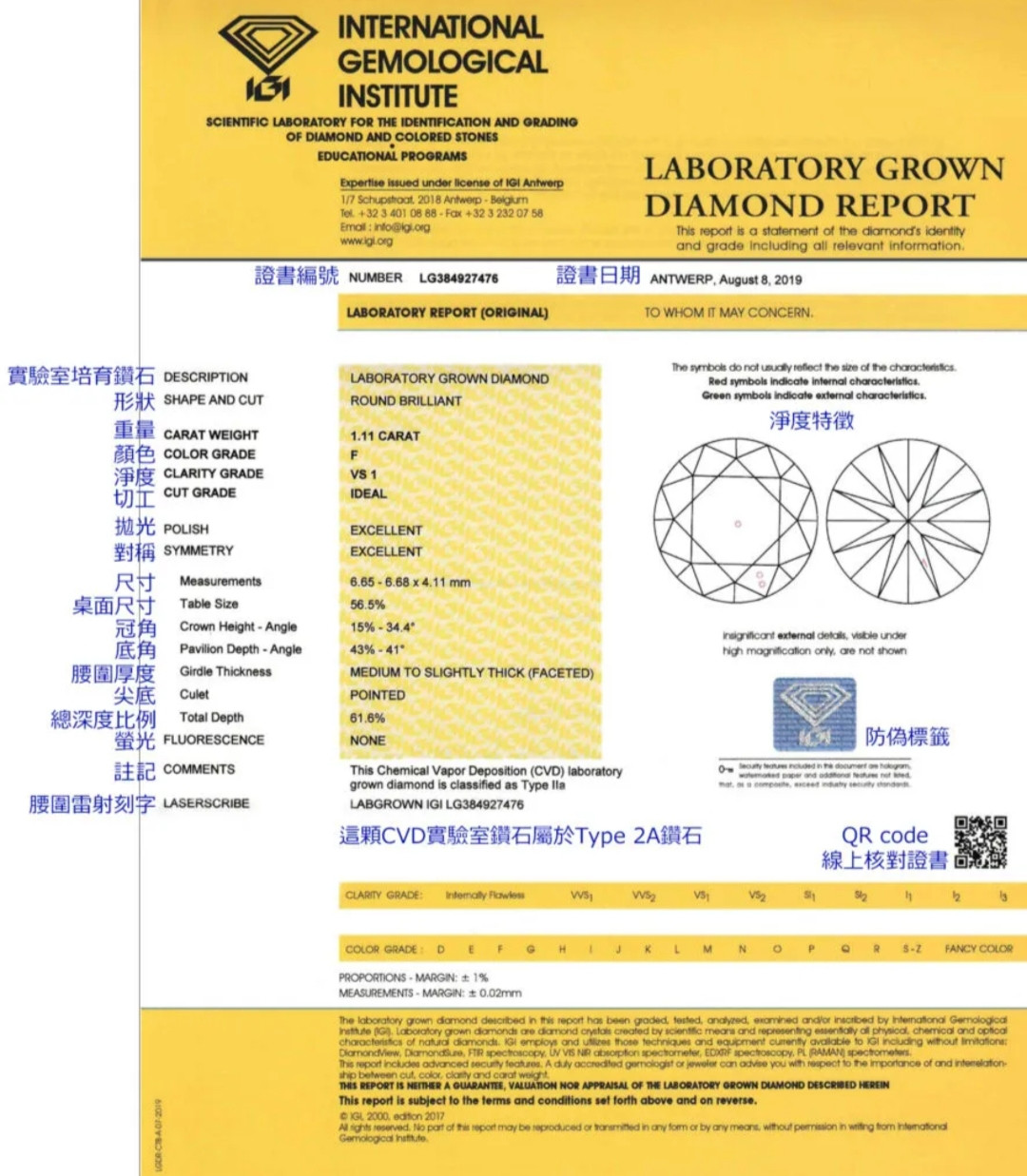
ePlusOne is committed to promoting a new economic cycle model that combines cultivated diamonds with carbon rights, providing new choices for consumers who pursue beauty and environmental protection. Through a lottery, ePlusOne users can obtain ePlusOne diamonds, each of which has an exclusive IGI (International Gemological Institute) certificate. This certificate is not only a quality assurance, but also a unique “identity card” for a diamond, clearly recording its origin and characteristics.
Compared with the traditional mining of natural diamonds, the production method of lab-grown cultivated diamonds can effectively reduce carbon emissions , save energy and reduce carbon emissions. This is in perfect line with the Sustainable Development Goals (SDGs) upheld by ePlusOne and demonstrates the company’s firm commitment to environmental friendliness.
IGI International Gemological Institute was established in 1975 and is headquartered in Antwerp, Belgium, the world’s diamond center. It is currently the world’s largest independent gemological identification laboratory and gemological research and education institution. It is also the first laboratory in the world to issue a jewelry identification certificate . IGI in Antwerp, Belgium, has laid many foundations for gem identification, such as pioneering the use of lasers to permanently mark diamonds, laser marking, research in the field of diamond cutting, and so on. IGI developed the world’s first comprehensive diamond cut rating table, which was the prototype of the modern diamond cut rating system.
IGI has branches in 10 countries around the world, including 30 laboratories and 19 teaching institutions. IGI’s influence in Asia and Taiwan began with the establishment of a laboratory in Hong Kong in 2004. In 2005, it began to cultivate lab-grown cultivated diamonds, provide professional grading and appraisal, and have paper certificates, not just online certificates.
•The earliest international institution to identify and provide certificates for lab-grown cultivated diamonds.
•The first institution in the world to obtain ISO 17025 certification for natural and lab-grown cultivated diamonds.
•Actively promote gemstone education and cultivate gemstone professionals.
•The world’s first certification institution that focuses on sustainable development and commits to carbon neutrality.
The IGI identification certificate is an important quality assurance document for lab-grown diamonds in the global market. It records the diamond’s 4C standards (carat, color, clarity, cut) in detail, and clearly indicates that the diamond was grown in a laboratory, and also indicates its production technology such as CVD (Chemical Vapor Deposition) or HPHT (High Pressure High Temperature Method).
In addition, IGI provides a physical hard copy of the certificate with the certificate number laser-engraved on the diamond’s girdle, allowing consumers to quickly check the identification information through the official website. This is not only a guarantee of quality, but also a reflection of ePlusOne’s commitment to consumer transparency.

The difference between Lab-grown Cultivated Diamonds and Natural Diamonds:
- Natural Diamonds are natural minerals that have been developed for hundreds of millions of years under the action of high temperature and pressure deep in the earth.
-Lab-grown Cultivated Diamonds are real diamonds created in a shorter time and under more controllable conditions through high-tech laboratories simulating the natural environment.
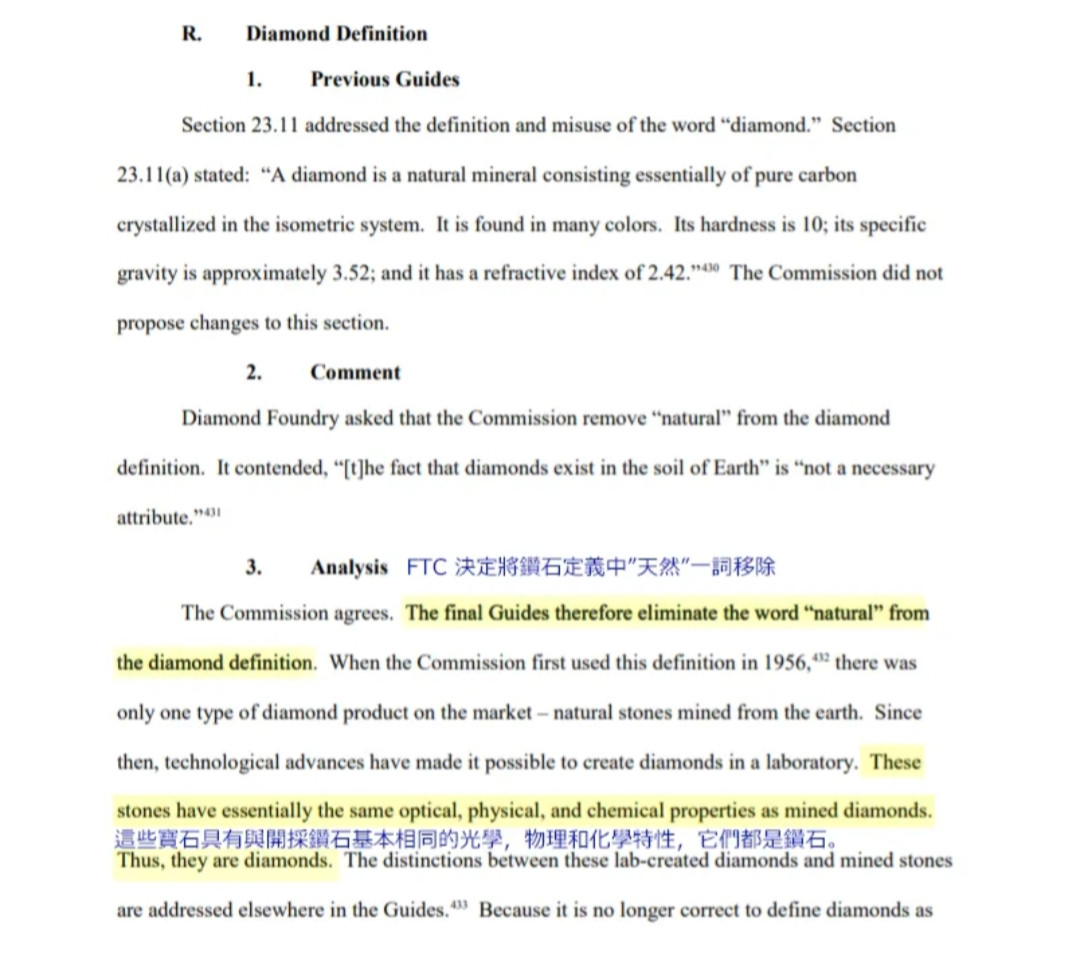
The U.S. Federal Trade Commission (FTC) redefined “diamond” in 2018, officially including lab-grown diamonds into the category of “diamonds”, and pointed out that lab-grown diamonds are identical to natural diamonds in terms of chemical structure, physical properties and optical properties.
The Federal Trade Commission (FTC) is a well-known independent government agency in the United States, which should be familiar to those engaged in international business activities. The organization was established with two purposes:
• Protect consumers
• Eliminate monopolistic business practices
Lab-grown Cultivated Diamonds have long been frowned upon in the jewelry industry because they may create conflicts of interest.
Compared with natural diamonds of the same grade and beauty, laboratory-grown diamonds have no price advantage over natural diamonds.Natural diamond dealers may tell you that it is not a diamond, that it is man-made, that it is fake, that one is similar to Soviet diamonds… In fact, this is not fair to cultivated diamonds.
Suppose you say a Lab-grown Cultivated Diamonds is not a diamond. It’s like going to the florist shop to buy roses and then telling your boss: Boss! These roses are not flowers because they are all cultivated in greenhouses. Only wild roses can be called flowers. Isn’t this very unreasonable?

Compared with the huge damage and resource depletion that may be caused to the environment during the mining of natural diamonds, lab-grown cultivated diamonds exhibit higher environmental value:
1. Reduce carbon footprint: CVD technology uses low-pressure mineral capsules and wind-powered microwave beams, combining ESG and “more approachable” price-based lab-grown cultivated diamonds to reduce the impact on the global environment.
2. Support sustainability goals: The production process complies with the requirements of global sustainable development.
3. Ethical choice: Consumers don’t need to worry about the inhumane labor issues associated with mining diamonds.

The market for lab-grown cultivated diamonds is growing rapidly, especially among millennials and younger generations:
-51% Consumer Awareness:More than half of U.S. consumers are aware of lab-grown cultivated diamonds.
- 65% Willing to Buy:Consumers consider lab-grown cultivated diamonds to be more cost-effective.
- The combination of high-tech and fashion:Many celebrities such as Hollywood superstars 《Pretty Woman》actress Julia Roberts, 《Captain Marvel》 Bric Larson, Angelina Jolie, 《Wonder Woman》Gal Gadot, Drake, Hailee Steinfeld, Lindsey Wixson, Emma Roberts, Rhea Seehorn, Lindsey Wixson and others, Emma Watson not only wear lab-grown cultivated diamonds, further enhancing their fashion status.
More importantly, with the advancement of certification and production technology, lab-grown cultivated diamonds have become the mainstream choice in the wedding rings and high-end jewelry markets. According to the survey, 89% of the respondents are willing to choose lab-grown cultivated diamonds as engagement rings, indicating that its market acceptance and recognition are rapidly increasing.
Price has undoubtedly become the trump card for Lab-grown Cultivated Diamonds to capture the market. Taking Swarovski as an example, a 4-carat Lab-grown Cultivated Diamond with “IF flawless” clarity sells for about 280,000 yuan, but a natural loose diamond of the same quality and carat size may cost 10 times or more. It’s no wonder that in mainland China, some people claim that Lab-grown Cultivated Diamonds have enabled the general public to achieve “carat freedom.”
The latest industry data confirms the “shine” of Lab-grown Cultivated Diamonds at the retail end. Tenoris, a jewelry industry analysis agency, conducted a survey of 1,500 jewelry stores in the United States and found that in terms of sales volume, Lab-grown Cultivated Diamonds have been eroding natural diamonds in recent years. There was a “death cross” between the market shares of lab-grown cultivated diamonds and that of natural diamonds in 2023. In 2023, lab-grown cultivated diamonds broke through the 50% critical point in one fell swoop. The latest data from April 2024 shows that the market share of lab-grown cultivated diamonds has reached 56.8%, while that of natural diamonds has dropped to 43.2%.
Data source: Tenoris.BI • Compiled by: Qiu Liyan

ePlusOne is a new economic cycle model that binds cultivated diamonds to carbon rights, supporting environmental sustainability, respecting resources and pursuing high-tech aesthetics. Combining the IGI certification guarantee with the innovative model of carbon reduction economy, ePlusOne is leading a green revolution in the jewelry industry, allowing every shining diamond to become a symbol of protecting the earth.



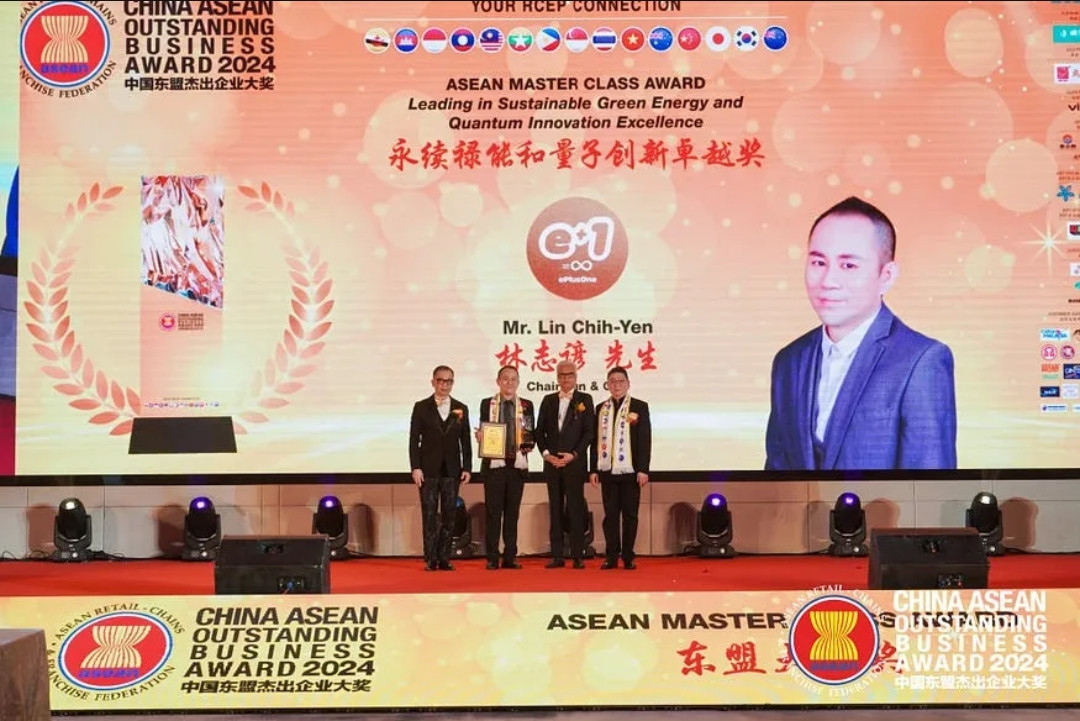
As the issue of carbon neutrality in ESG carbon emissions continues to attract attention, 【ePlusOne】e+1 METAVERSE QUANTUM TECHNOLOGY CO., LTD. won the 【Sustainable Green Energy】and 【Quantum Innovation】 Excellence Awards at the Asean Outstanding Business Awards 2024 !